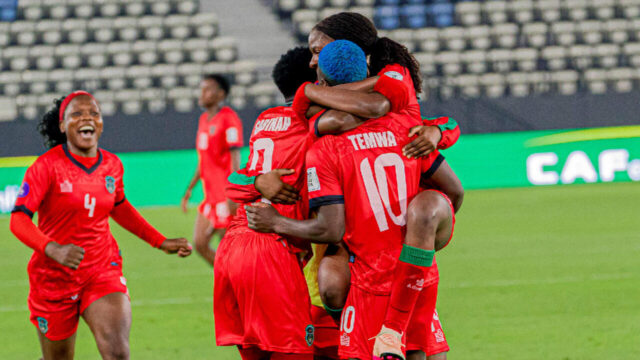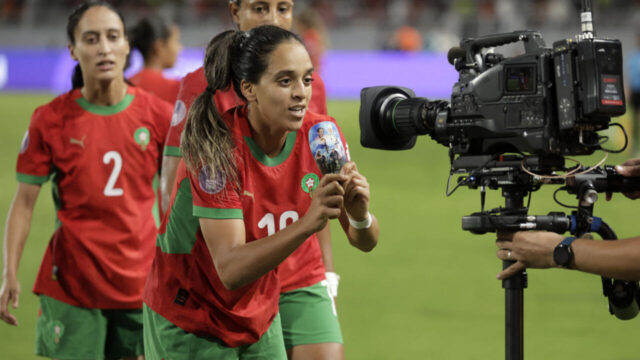
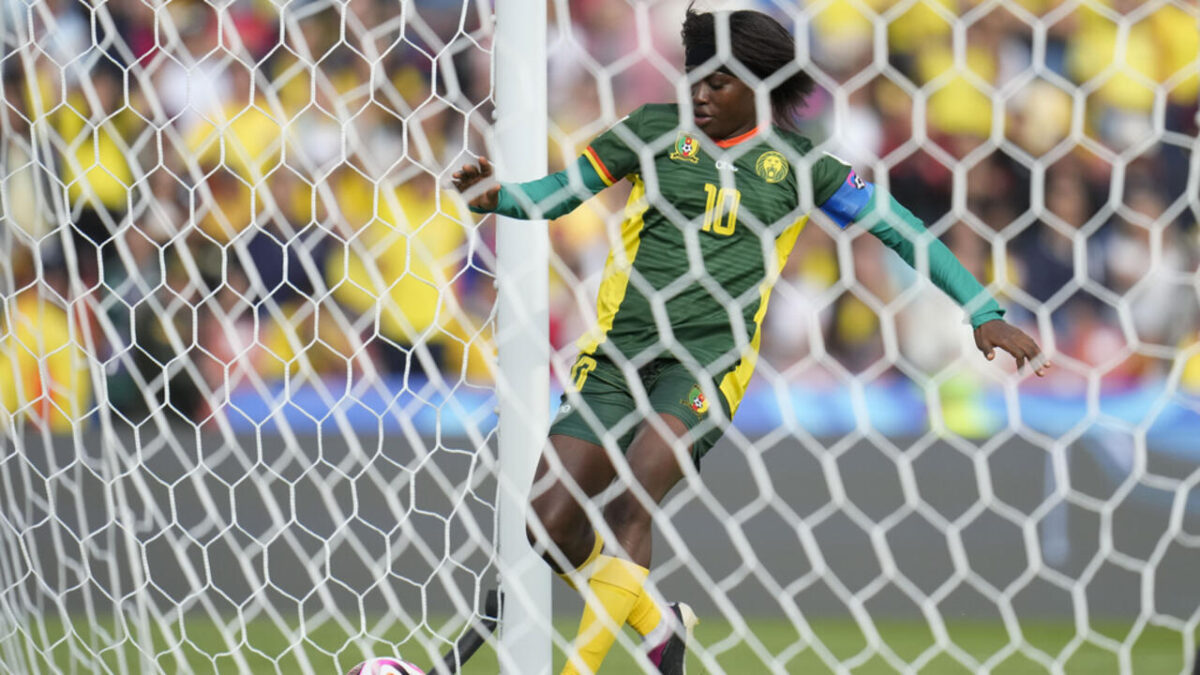
Cameroon won their first Women’s Africa Cup of Nations on 16 August 2026, beating Malawi 3–0 in Rabat. All three goals came before half-time. The CAF match report identifies Marie Ngah as the scorer of the first and third goals and Naomi Ndjoah Eto as the scorer of the second. Correction, 21 September: an earlier version of this article shortened the scorer’s name to “Marie Nga”. The match organiser lists her as Marie Ngah; the goal chronology has also been checked against its report.
The first half, in three moments
- 20th minute: Ngah opened the scoring.
- 30th minute: Ndjoah Eto made it 2–0 after a pass from Myriam Nyadjou.
- 45+3 minutes: Ngah scored again after a pass from Ndjoah Eto, putting Cameroon three goals ahead at the break.
The sequence is more revealing than the final score alone. Cameroon’s second scorer also created the third goal, while the two Ngah finishes turned an early advantage into a lead Malawi never recovered from. CAF reports that Malawi had arrived at the final as the tournament’s leading scorers with 12 goals. Holding that attack scoreless was as important to the outcome as Cameroon’s first-half finishing.
Why this was a breakthrough, not just another final
Cameroon had previously reached the final in 2004, 2014 and 2016, losing each time to Nigeria without scoring, according to CAF. In the 2026 final, they scored three goals before half-time. That reverses a specific pattern across the team’s earlier finals: the title ended both the series of defeats and the wait for a first goal in the deciding match.
The route into the tournament also makes the result unusual. Cameroon was added after the field expanded to 16 teams, having not originally qualified. CAF records a 1–0 quarter-final win over Nigeria and a penalty shootout victory over host Morocco after a goalless semi-final. Cameroon did not concede in its knockout matches, a useful measure of how the defence supported the decisive attacking bursts.
What Malawi achieved
For Malawi, the final was a first appearance in the competition and a first chance at the continental title. Its 12 goals before the final show that reaching Rabat was no accident of a single narrow game. The 3–0 defeat does not erase the attacking campaign, but it underlines how different the final was from Malawi’s earlier matches: a three-goal deficit by the interval left its forwards trying to break down a team already protecting a large lead.
Cameroon became the fourth nation to win the Women’s AFCON, after Nigeria, Equatorial Guinea and South Africa. That fact describes the tournament’s winners to date; it is not a prediction of future results. The measurable change for Cameroon is that a team with three final defeats now has its first title and, on this occasion, a clean sheet in the final.